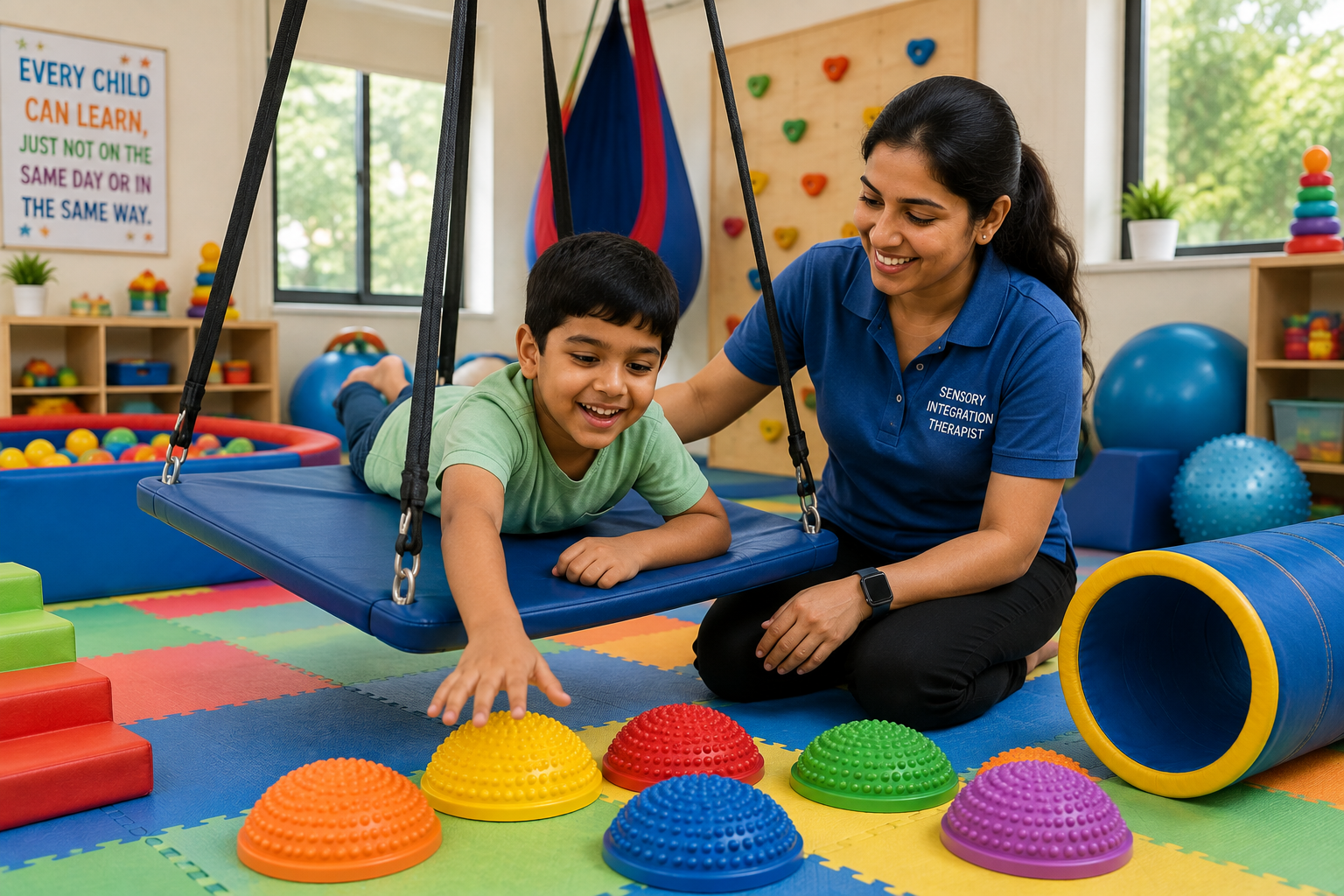
What Is Sensory Integration Therapy?
Sensory integration refers to the way the nervous system receives, organizes, and responds to information from different senses.
Sensory-based occupational therapy may use structured activities and therapeutic equipment to provide different types of sensory input. These activities may include movement, pushing, pulling, climbing, balancing, tactile play, and other age-appropriate tasks.
The purpose is not simply to expose a child to sensory stimulation. Instead, activities should be selected according to the child's functional needs and used to support participation in meaningful activities.
Who May Benefit From Sensory Integration Therapy?
Sensory processing differences can occur in children with a range of developmental and behavioral conditions. They may also occur without a specific diagnosis.
Sensory-focused occupational therapy may be considered for children who experience difficulties with:
A sensory difficulty alone does not establish a diagnosis. A comprehensive developmental and functional assessment is important before deciding on an intervention plan. The American Academy of Pediatrics also advises that sensory processing difficulties can occur across multiple developmental and behavioral conditions and recommends thorough evaluation.
Signs Your Child May Have Sensory Processing Difficulties
Children can respond to sensory information in different ways. Some may become overwhelmed by certain sensations, while others may actively seek additional sensory input.
Our Sensory Integration Therapy Approach
Our sensory integration program is designed around the individual child.
Step 1: Initial Assessment
The first step is understanding the child's developmental and functional needs.
The occupational therapist may discuss:
Step 2: Identify Functional Goals
Rather than focusing only on sensory responses, therapy goals are linked to everyday activities.
Step 3: Individualized Therapy Activities
Activities are selected according to the child's needs and tolerance.
Step 4: Functional Practice
Sensory activities are connected to meaningful tasks whenever possible.
Step 5: Parent Guidance
Parents can receive practical recommendations for supporting their child's participation at home.
Sensory Integration Therapy for Autism
Sensory differences are common among children with Autism Spectrum Disorder. Some children may be particularly sensitive to sounds, textures, movement, lights, smells, or other sensory experiences.
Sensory-focused occupational therapy may be included within a broader intervention program for children with autism.
Sensory integration therapy should not be considered a standalone cure for autism. It is better viewed as one possible component of a broader, individualized support plan. The AAP has noted that evidence for sensory integration therapy remains limited and recommends discussing potential benefits and limitations with families.
Sensory Integration Therapy for ADHD
Children with ADHD may experience difficulties with attention, activity level, impulse control, organization, and participation.
Sensory Integration Therapy for Developmental Delay
Children with developmental delays may have difficulties with motor development, coordination, play, self-care, attention, or participation.
Occupational therapy can incorporate developmentally appropriate sensory-motor activities to support:
Common Activities Used in Sensory-Motor Therapy
Depending on the child's individual assessment, an occupational therapist may use activities such as:
Swing Activities
Different movement patterns may be used to provide vestibular and movement experiences.
Obstacle Courses
Obstacle courses can combine climbing, crawling, balancing, jumping, and problem-solving.
Tactile Activities
Children may interact with different safe textures through structured play activities.
Proprioceptive Activities
Pushing, pulling, carrying, and resistance-based activities can provide proprioceptive input.
Balance Activities
Balance exercises can support coordination and body awareness.
Fine Motor Activities
Activities such as puzzles, threading, drawing, construction, and manipulation tasks can support hand skills.
Gross Motor Activities
Jumping, climbing, throwing, catching, and coordinated movement can support motor development.
Functional Activities
Therapy can incorporate dressing, feeding-related tasks, handwriting preparation, and other daily activities when these are relevant to the child's goals.
Benefits of an Individualized Sensory-Motor Program
The potential benefits depend on the child's needs and the specific goals of therapy.
Sensory Integration Therapy in East Delhi
Families in East Delhi have access to occupational therapy and child-development centres offering sensory-focused services.
Course Features
- Start Date: 24 March 2024
- Years old: 04 - 06 years
- Class Size: 20 - 30 kids
- Carry time: 01 hours / 02 hours
- Class Duration: 10 - 12 month
- Class time: 09:00am - 6:00pm
- Rating:
- Tution Fee: 2500.00